
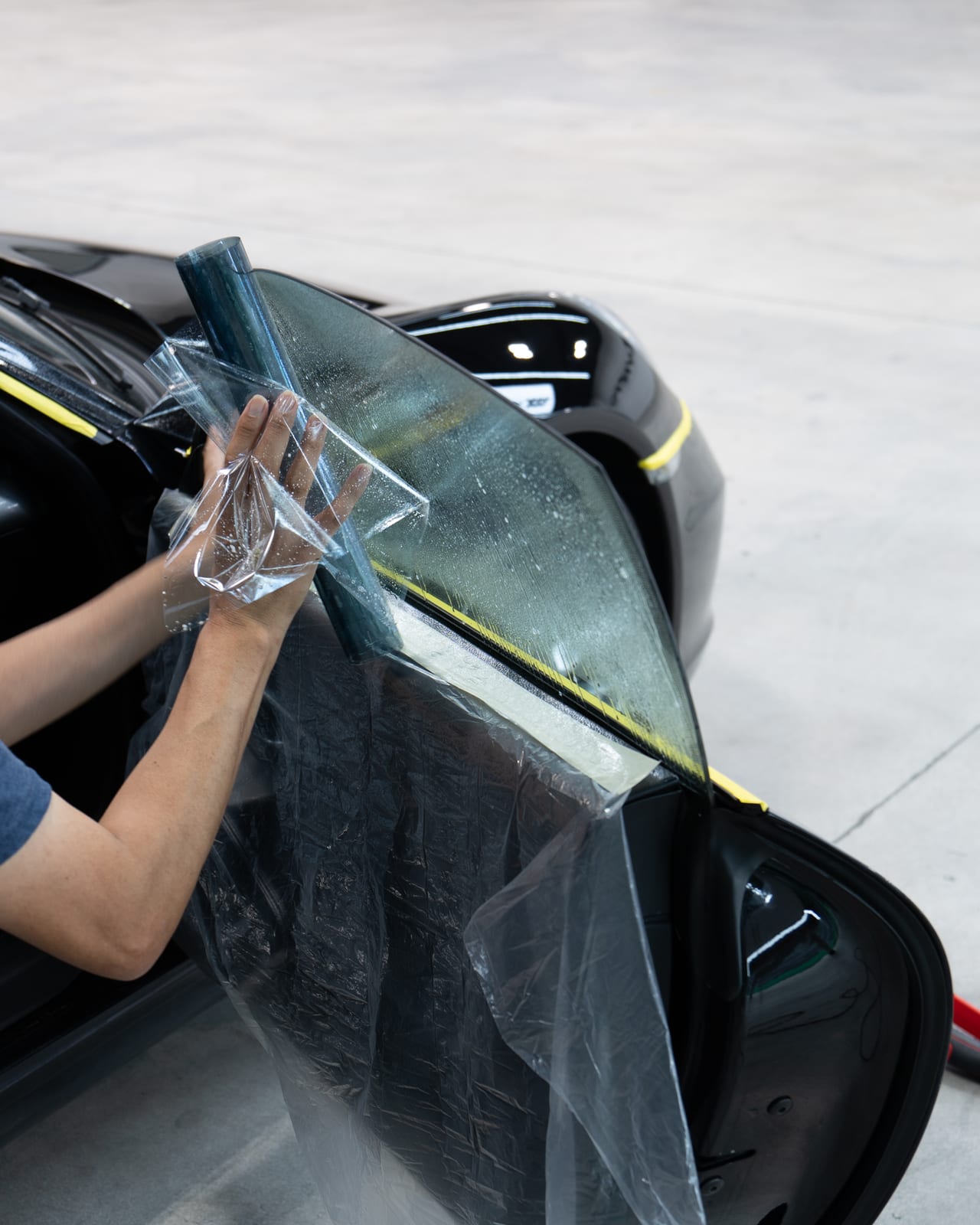
Summer in the Valley is why most people finally get around to tinting. A car parked in the open turns into an oven, the seats get too hot to sit on, the dash starts to fade, and the glare on the 118 at four in the afternoon is genuinely dangerous. Good film fixes all four.
The three kinds of film, honestly compared
Dyed film is the cheap option. It darkens the glass and cuts glare, and that is roughly the extent of it. It rejects very little heat, and it is the film that eventually goes purple and bubbles. We do not recommend it and we will tell you why in person.
Carbon film blocks a real amount of heat, holds its color instead of fading, and does not interfere with phone signal, GPS, or keyless entry. It is a solid middle choice and plenty of our customers land here.
Ceramic film is the top of the range. It rejects the most heat for a given darkness, which is the whole argument for it in California, where the law keeps your front windows light. It is optically clearer, so night driving is easier, and it will not fade. It costs more. The people who buy it rarely wish they had not.
California tint law in plain English
California Vehicle Code section 26708 sets the rules, and they are stricter than most drivers assume.
Front side windows must let at least 70 percent of light through. In practice that means a light film, not a dark one. A quality ceramic film at that level still rejects a great deal of heat, which is exactly why ceramic is worth paying for up front.
The windshield can carry a tinted strip along the top, and that strip cannot come down more than four inches from the top of the glass.
Rear side windows and the back window can be as dark as you want, provided the car has functioning side mirrors on both sides.
Reflective and mirrored film is not allowed. Neither are red, amber, or blue tints.
Medical exemptions exist. They require a certificate signed by a licensed physician or optometrist, and the documentation needs to stay in the vehicle.
Fines start modest and escalate if the tint stays on the car. We will install what you ask us to install, and we will tell you plainly where the legal line sits before we start, so you are making the decision with real information. Confirm current limits with the DMV, since the code does get amended.
What tint actually gets you
Heat. The difference between a tinted and untinted car parked in the same lot in August is not subtle. Your air conditioning works less and the cabin is livable when you get in.
UV protection. Quality film blocks the overwhelming majority of ultraviolet light. That protects your skin on a long commute and it protects your dashboard, seats, and door cards from the fading and cracking that makes an interior look old.
Glare. Low sun, oncoming headlights, and reflections off the car ahead of you all get easier to deal with.
Privacy. What is in your back seat is nobody’s business in a parking lot.
Glass safety. Film holds tempered glass together when it breaks, which keeps fragments out of the cabin.
How we install it
Every window gets cleaned and decontaminated before film touches it. Anything left on the glass shows up as a speck under the film forever, so this step is not rushed.
We cut and heat shrink the film to the exact curve of your glass. That is the step that separates a clean install from one with gaps and light lines at the edges, and it is where experience shows.
Afterward the film needs to dry. During that period you may see haziness or small water pockets. Both are normal and both go away on their own. Leave the windows up until we tell you it is safe, because film that is still curing will peel if it gets caught in the door seal.
Removing old tint
If your current film is purple, bubbling, or lifting at the corners, it comes off before anything new goes on. Rear windows with defroster lines take patience, because those lines are fragile and a rushed removal breaks them. We do it properly and we quote it up front rather than surprising you with it.
Tinting across the San Fernando Valley and Los Angeles
We tint out of our Chatsworth shop and we see cars from everywhere around it. West Hills, Canoga Park, Winnetka, Simi Valley, Santa Clarita, Sylmar, Mission Hills, and Panorama City are all short drives, and a good number of customers come over the hill from the rest of Los Angeles.
Anyone who has parked in an open lot in this part of the Valley in July already understands why people tint here. Call with your year, make, and model and we will book a time that gets you in and out the same day wherever the job allows.
Common questions
How long does tinting take?+
It depends on the vehicle and how many windows. We will give you a time when you book.
Will tint block my phone signal or GPS?+
Carbon and ceramic films do not. Older metallic films did, which is where the concern comes from.
Can you tint the whole windshield?+
A clear or very light heat rejection film on a windshield is a real product and it makes a large difference in this climate. Anything darker than the law allows is not something we will put on the front glass. Come talk to us about the options.
I already have a ticket for my tint. Can you help?+
Yes. We remove illegal film and replace it with something that keeps you legal and still rejects heat.
What does tinting cost?+
Film choice and vehicle determine it. Call (747) 220-0200 with your year, make, and model and we will quote it.
Book your tint. Call (747) 220-0200 or stop by the Chatsworth shop. We will show you film samples on real glass so you can see the difference between carbon and ceramic before you choose.